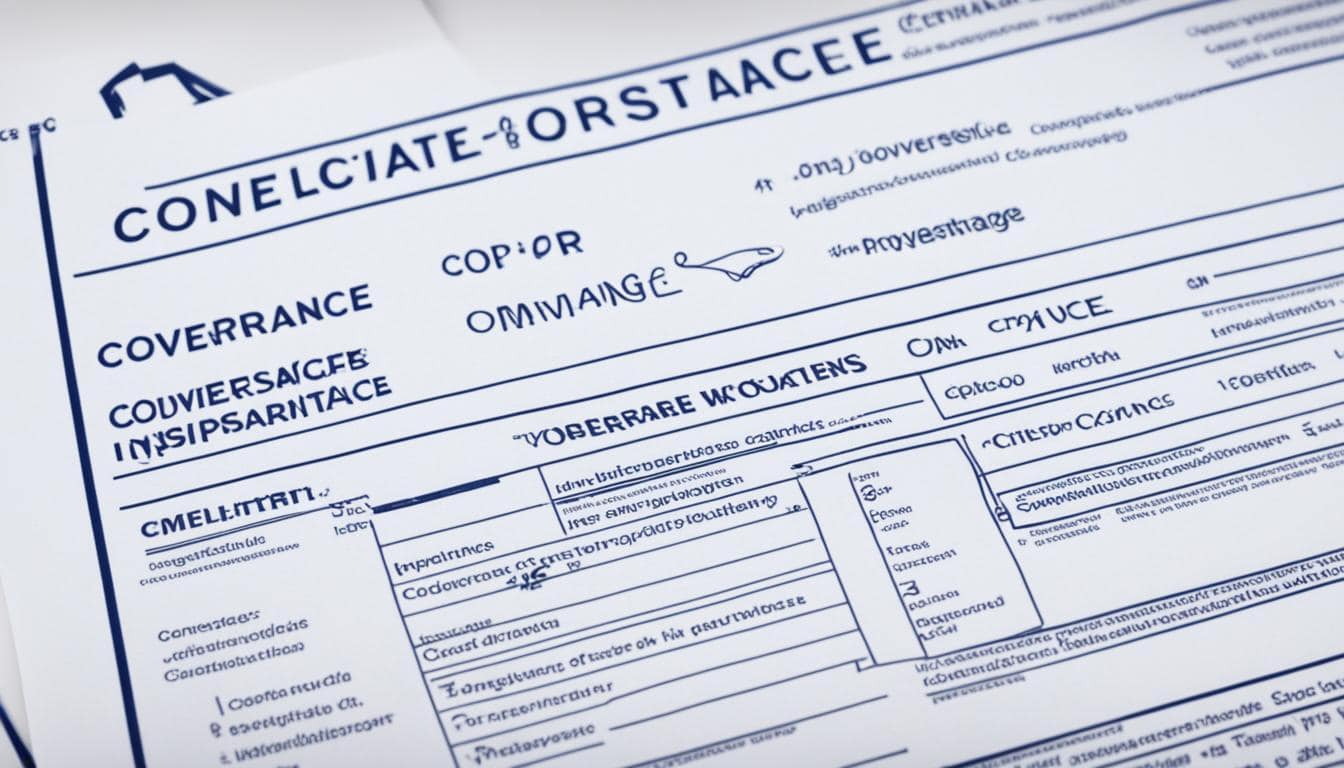
Within the framework of group policies, certificates of insurance (COIs) serve as vital documents, providing proof of insurance coverage and summarizing the essential aspects of the policy. It’s important for businesses, especially when hiring contractors, to ensure that these parties hold current COIs as confirmation of adequate insurance coverage. For those involved in these transactions, understanding certificates of insurance is indispensable to ensure all parties are appropriately protected.
Key Takeaways
- Certificates of insurance are fundamental components of group policies, evidencing insurance coverage.
- COIs encapsulate key details of the policy, such as coverage limits and policyholder information.
- Businesses routinely require COIs from contractors to mitigate liability risks.
- Comprehension of COIs is critical for policyholders and certificate holders alike.
- COIs facilitate transparency and trust between businesses and third-party contractors.
What Is a Certificate of Insurance (COI)?
Understanding the function and necessity of a certificate of insurance is paramount for businesses and professionals across various industries. This documentation serves as a safeguard and a means to confirm the integrity of insurance coverage to interested parties.
Definition and Purpose of a COI
The COI definition pertains to a document that an insurance company or broker provides, signifying that an insurance policy is in place. The purpose of COI extends beyond mere documentation—it stands as a declaration of insurance coverage for the policyholder, mollifying the concerns of third parties regarding potential risks.
Key Components of a Certificate of Insurance
Each certificate of insurance encompasses several critical details crucial for its complete comprehension. These details are meticulously itemized as the components of COI, embodying the heart of the document’s utility and function.
| Component | Description |
|---|---|
| Policyholder’s Name | The registered name of the individual or entity holding the insurance policy. |
| Policy Effective Date | The commencement date from which the policy is considered active. |
| Coverage Type | The specific nature of the coverage provided (e.g., general liability, professional liability). |
| Policy Limits | The maximum amount that the insurance policy will pay out. |
| Insurer’s Contact Information | Essential contact details for the insurance provider. |
Why Businesses Require COIs from Contractors
The decision by businesses to mandate certificates of insurance from contractors is not arbitrary but a calculated move to mitigate potential risks. The business requirements for COIs are rooted in the desire to create a buffer against liabilities that may originate from the contractors’ operations, ensuring that any resultant costs or damages will not financially burden the business owner or compromise the business’s integrity.
In a Group Policy, Who Is Issued a Certificate of Insurance?
Understanding who receives COI under a group policy is vital for businesses and individuals involved in the administration of insurance coverages. Typically, the primary COI recipients in group policy arrangements are the entities or individuals who directly hold the policy. This includes businesses, associations, or other organizations that have purchased group coverage on behalf of their members, employees, or affiliates.

In essence, the certificate of insurance serves as a tangible piece of evidence that the policyholder possesses the insurance they claim to. Not only does it provide peace of mind, but it also fulfills legal and contractual obligations, as many industries mandate proof of coverage through a COI before they engage in operations with the policyholder.
Moreover, the spectrum of COI recipients in group policy extends to additional insureds, a category that encompasses entities such as subcontractors, vendors, and sometimes clients. These parties often need to be listed on a COI to prove their coverage under the group policy, which is especially prevalent in situations where multiple businesses or stakeholders are exposed to shared risks.
- Primary Policyholder – the main holder of the insurance coverage.
- Additional Insureds – other individuals or entities, like subcontractors or vendors, covered by the policy.
To recap, in a group policy context, the COI is not just a formality but a critical component in the chain of trust between the insurer, the insured, and all other involved parties who rely on the protection promised by the policy. Whether for compliance, verification, or partnership, understanding who receives COI is an essential part of managing group insurance effectively.
The Process of Obtaining and Validating a COI
Embarking on the essential task of obtaining COI starts with a straightforward request by the business seeking verification of insurance coverage. This initial step establishes a line of communication with the insurance provider, who is responsible for issuing accurate and current certificates. It’s a standardized procedure that reflects due diligence on the part of the requesting business, mitigating risk and paving the way for secure commercial relationships.
Upon receipt of a COI, the next critical action is validating COI. This process is not merely a cursory glance at the document but involves meticulous examination. The involved parties must confirm that the details of the insured precisely align with the contractor or entity they are engaging. This verification includes checking policy numbers, coverage types, and the effective dates of the policy, ensuring they are active during the period of interest. Any discrepancies found during this phase can be potential red flags and should be addressed immediately.
Understanding the COI process becomes even more significant when the contracted project extends over a longer timeframe. It is not uncommon for a business to require a new COI if the existing policy is approaching its expiration prior to the completion of the contractual work. To avoid any coverage gaps that could expose both parties to unforeseen liabilities, it’s prudent for businesses to request updates on the insurance status, reaffirming a safety net is firmly in place throughout the duration of the engagement.