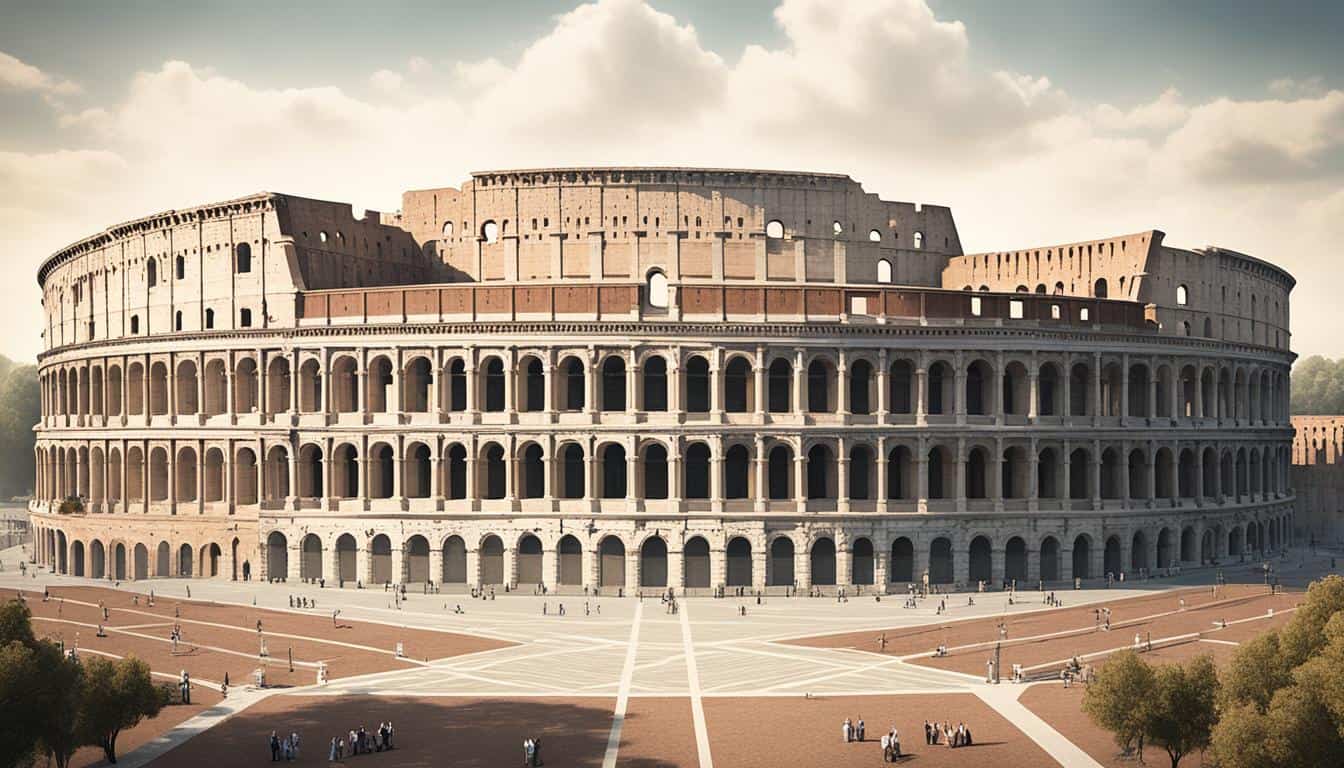
The foundational frameworks of the American Government bear the unmistakable hallmarks of both Ancient Greece and Ancient Rome. These venerable civilizations bestowed upon the United States a rich legacy of democratic principles, the concept of the rule of law, and the ingenious architecture of governance that separates powers. As pillars of Western political thought, the influence of these ancient societies manifests itself in the very core of American democracy and its institutions.
Inspiration from the Ancients: Direct Democracy and the Rule of Law
Embarking on a journey through history, one witnesses the origins of democracy in the Athenian assembly, where the seeds of public participation and governance were sown, germinating into the representative democracy now emblematic of the United States. Likewise, the hallowed Roman halls of power contributed sturdy institutional structures that informed American governance planning. These ancient influences did not merely end with political theories but extended into physical manifestations—America’s stately edifices echoing the grandeur of Rome and the poise of Athens’ architectural triumphs.
Key Takeaways
- The principles of democracy in the United States trace back to Ancient Greece, particularly Athens’ model of direct democracy.
- Ancient Roman governance structures heavily inspired America’s three-branch system of checks and balances.
- The rule of law, a concept deeply rooted in Greek philosophy, remains a cornerstone of the American justice system.
- The United States’ governing documents incorporate influences from Roman law.
- Architectural styles of significant U.S. buildings reflect Ancient Greek and Roman traditions, symbolizing democratic values and governance.
Inspiration from the Ancients: Direct Democracy and the Rule of Law
The riveting history of governance brings us back to the classical civilizations of Ancient Greece and Rome, where concepts such as Direct Democracy and the Rule of Law were not just theoretical constructs, but living practices that have indelibly marked the ethos of modern political systems, particularly in the United States. Reviewing the genesis of these ideals illuminates the inherent values of participation and justice that are foundational to American society today.
Athenian Beginnings of Democracy
In the city-state of Athens, a revolutionary concept emerged: Athenian Democracy. Here, for the first time in history, citizens gathered to make decisions about their polis, directly influencing the course of their collective lives. Athenian Democracy was a radical form of government that allowed individuals to assert their will through debate and voting in the assembly, thus embodying the spirit of Direct Democracy.
Rule of Law: From Greek Philosophy to Modern Day Justice
Central to the harmonious operation of society, the Rule of Law finds its roots deeply embedded in Greek Philosophy. The wisdom of Socrates, Plato, and Aristotle expanded on the idea that just laws should govern societies, not the capricious whims of individuals. This Hellenic vision of an orderly and just society has cascaded through the ages, becoming a cornerstone of contemporary legal systems, including that of the United States.
Roman Institutional Structures and Governance
Rome’s grand narrative in the annals of governance contributed institutional wisdom, particularly in the frameworks of republic and empire. Roman Governance was characterized by a robust system of checks and balances, intricate legislative assemblies, and a codified body of laws. Their administrative expertise and the resilience of their legal infrastructures have served as a template for many modern governments.
American Adaptation of Democratic Ideals
The founding fathers of the United States, enlightened by the governance of yore, adapted these historic principles into the very fabric of the nation. The form of democracy practiced in the United States can be seen as an American Adaptation of the old, celebrating the participative ideals of Athenian Democracy and embracing the Rule of Law, tailored to the needs of a new and evolving land.
| Ancient Practice | Modern Adaptation | Impact on U.S. Governance |
|---|---|---|
| Athenian Direct Democracy | Representative Democracy | Inclusion of citizens in the political process through elected officials. |
| Greek Rule of Law | Constitutional Law | Codification of rights and procedures ensuring justice and equality. |
| Roman Institutional Structures | Federal System of Government | Division of powers between different levels of government with checks and balances. |
| Roman Republican Ideals | Electoral College System | Indirect election of the executive, reflecting both democratic and federalist principles. |
Each strand of historic thought, be it the inclusiveness of Athenian Democracy, the reasoned processes governed by the Rule of Law, or the administrative sagacity of Roman Governance, has woven its way into the vibrant tapestry of American governance, demonstrating a profound American Adaptation of democratic ideals that continue to evolve and resonate with the philosophy of self-governance and justice.
Balancing Power: The Three-Branch System
The foundation of the United States Government is firmly rooted in the concept of the Three-Branch System, a direct reflection of the need for a robust system of Checks and Balances. This system, separating governmental powers across three distinct branches, ensures that no single entity holds unchecked authority, thereby safeguarding the ideals of liberty and justice.
Integral to this structure is the enduring principle of Separation of Powers, originating from the Roman Republic and enshrined in American constitutional thought. It is designed to prevent tyranny and promote transparent and accountable governance through a continual process of equilibrium and oversight among the branches.
| Branch | Responsibility | Checks and Balances Example |
|---|---|---|
| Legislative | Creating laws | The President can veto legislation; the Supreme Court can declare laws unconstitutional. |
| Executive | Enforcing laws | Congress has the power to approve presidential nominations, control the budget, and can impeach the president; the Judiciary can declare executive actions to be unlawful. |
| Judicial | Interpreting laws | The President appoints judges; Congress confirms the appointments and can impeach judges. |
With each branch assigned specific powers, the Three-Branch System of the United States Government remains a testament to human ingenuity in crafting balanced political order. This structure not only represents a proactive measure against the centralization of power but also illustrates a deep understanding of governance, requiring constant diligence to maintain the equilibrium established by the Checks and Balances.
The Architectural and Symbolic Legacy of Ancient Greece and Ancient Rome on the American Government
The United States stands as a modern testament to the enduring Architectural Legacy of ancient civilizations. By adopting stylistic elements and structural designs reminiscent of Ancient Greece and Ancient Rome, the American government physically embodies the principles of democracy and republicanism that these past societies espoused. The grandeur and formality of ancient architectural styles are part of the spatial narratives within iconic American buildings.
For instance, the U.S. Capitol, with its towering columns and grand steps, echoes the Ancient Greek Influence in its neoclassical design, symbolizing the pillars of democratic governance. Conversely, the Supreme Court reflects the Ancient Roman Influence in its use of domes and the imposing facade that signifies the gravity of law and order. These buildings, the seats of legislative and judicial power, not only mirror the physicality of ancient structures but also serve as potent symbols of the philosophical ideals inherited from Greece and Rome—ideals such as justice, civics, and public service.
The Symbolic Legacy of Ancient Greece and Rome is inseparably woven into the fabric of American national identity. Moreover, these ancient societies act as custodians of a heritage that has endeavored through the ages to preserve concepts of citizenship, civic duty, and moral codes within the architecture of governance. In the arches and façades of Washington, D.C., the ambitious spirit of two worlds converges, reminding citizens of a lineage that scales back to the very genesis of the democratic creed.