
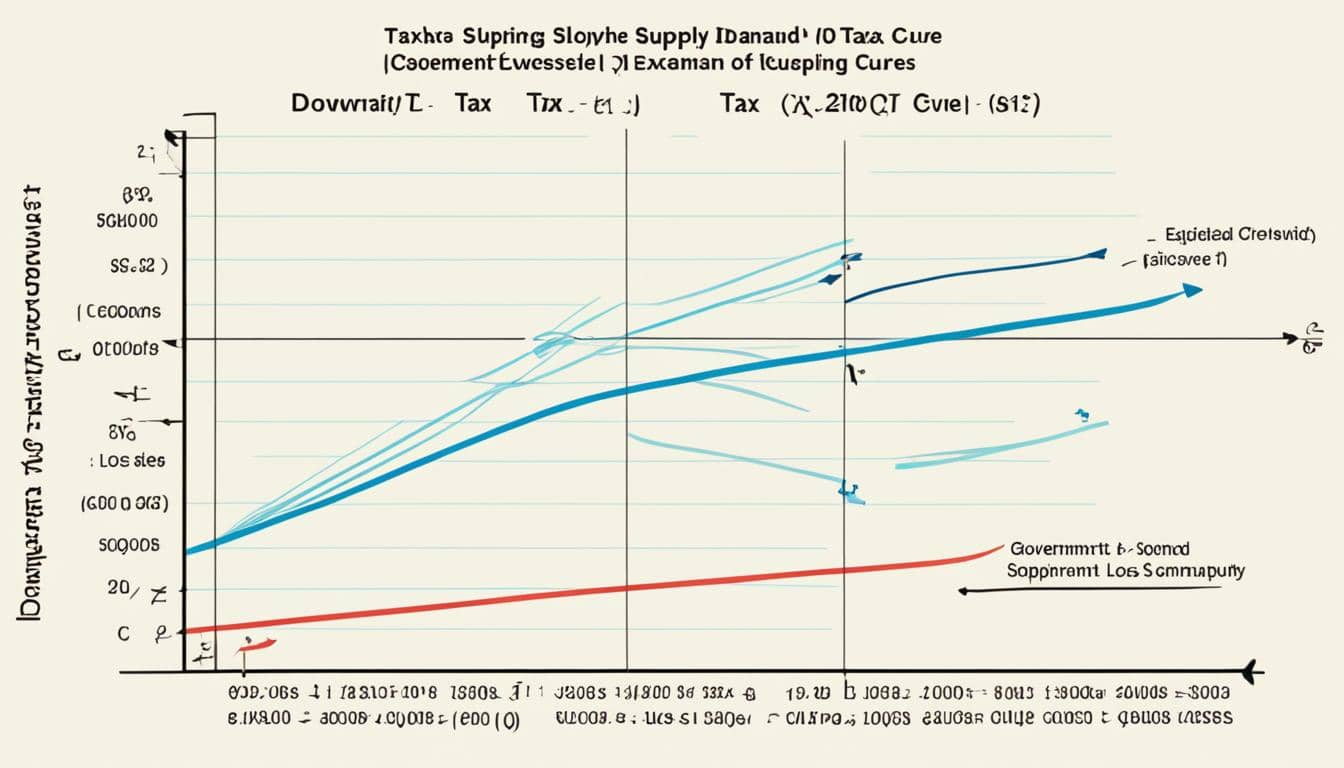
When the government imposes an excise tax on the market, it inadvertently introduces a deadweight loss, manifesting as a reduction in economic efficiency. This loss occurs due to the decrease in producer and consumer surplus triggered by the taxation, subsequently disrupting the balance of supply and demand. Understanding this deadweight loss is pivotal for assessing the impact of taxation on market activities and for formulating policies that safeguard against significant economic inefficiencies in taxed markets.
Exploring Deadweight Loss of Taxation
Key Takeaways
- Deadweight loss represents the economic inefficiencies resulting from the imposition of taxes in the marketplace.
- Taxation’s impact on supply and demand equilibrium is the primary factor contributing to deadweight loss.
- Economic efficiency is compromised when consumer and producer behaviors change in response to taxed markets.
- The calculation and implications of deadweight loss are crucial for making informed tax policy decisions.
- By analyzing deadweight loss, policymakers can strategize to minimize its effects and improve market outcomes.
Exploring Deadweight Loss of Taxation
When governments levy taxes on goods and services, the ripple effects on the economy can manifest as a deadweight loss, signaling a decline in overall economic efficiency. This section delves into the intricate dynamics of how taxation, particularly excise taxes, disturbs the delicate balance of market equilibrium.
The Fundamentals of Deadweight Loss
Deadweight loss is a critical concept in fiscal policy analysis, emerging when a tax-induced price increase leads to a decrease in the quantity of goods sold and bought in the market. This situation arises because the added tax burden disrupts the optimal interplay of supply and demand, paving the way for resource misallocation. Taxation can thus serve as a double-edged sword, raising revenue for public projects and services while impeding the economy’s potential growth.
Impact of Excise Tax on Economic Efficiency
Among various taxation types, the excise tax is notable for its targeted application on specific commodities, such as alcohol or tobacco. While intended to curb consumption or to raise dedicated funds, excise taxes alter the pricing structure, leading to less-than-optimal consumer purchase behaviors and production decisions. As a result, these taxes often reduce economic efficiency by creating a gap between the consumer’s willingness to pay and the producer’s cost, a scenario emblematic of deadweight loss.
Alfred Marshall’s Theory on Taxation and Market Equilibrium
Alfred Marshall, a seminal figure in economics, discussed in depth how taxation influences market equilibrium. Marshall posited that supply and demand are intertwined with costs and production capacities. Taxes that drive a wedge between consumers’ valuations and producers’ costs lead to diminished market efficacy. Marshall’s insights accentuate the importance of measuring and mitigating the impacts of taxes to uphold a balanced economic environment.
| Economic Indicator | Without Taxation | With Excise Tax |
|---|---|---|
| Consumer Surplus | Higher | Lower |
| Producer Surplus | Optimal | Reduced |
| Market Equilibrium | Efficient | Distorted |
| Total Revenue | Maximized | Encumbered by deadweight loss |
In summary, a keen understanding of deadweight loss, its origins, and its ramifications can serve as an invaluable asset for policymakers navigating the nuanced landscape of taxation and its implications for economic efficiency.
Key Factors Influencing the Magnitude of Deadweight Loss
Understanding the magnitude of deadweight loss within an economy is crucial for effective fiscal policy-making. This magnitude is not uniform; it fluctuates depending on several factors built into the structure of taxation and the corresponding market dynamics.
One of the primary determinants of this fluctuation is the elasticity of price. Markets trading goods with high elasticity tend to experience a substantial increase in deadweight loss when faced with additional taxation. Conversely, in markets structured around inelastic goods, the deadweight loss is typically less acute, since consumer and producer behavior changes minimally in response to price variations.
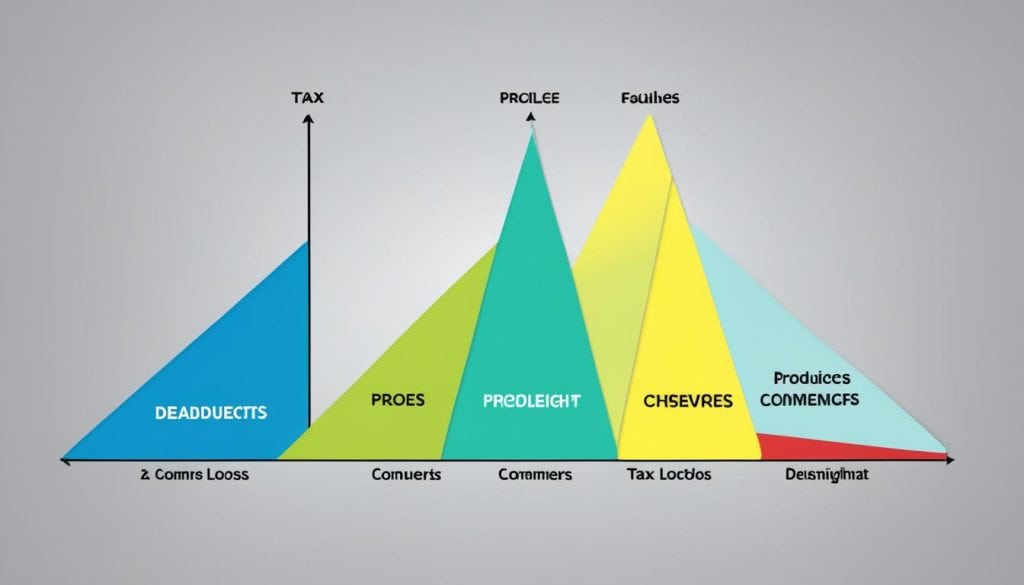
Tax elasticity is another influential factor, reflecting the ability of a tax base to adjust to a newly imposed or altered tax. Markets with a high degree of tax elasticity are susceptible to greater deadweight loss, as they are more likely to exhibit changes in behavior with changes in taxation levels. Additionally, the type of tax applied—be it income, sales, or excise—can contribute differently to the market’s overall deadweight loss.
| Factor | Influence on Deadweight Loss |
|---|---|
| Market Structure | Markets with competitive structures are generally more adaptive, potentially minimizing deadweight loss compared to monopolistic markets that may experience heightened inefficiencies under taxation. |
| Availability of Substitutes | When substitutes are readily available, the magnitude of deadweight loss can escalate as consumers shift their preferences more easily in response to taxed goods or services. |
| Tax Rate | Higher tax rates can lead to more considerable adjustments in consumer and producer behavior, which may amplify deadweight loss. |
Ultimately, these determinants interact within a complex fiscal landscape to shape the market structure and dictate the tax policy impact. By closely examining these contributing factors, those in the realm of public finance can devise and implement tax strategies that aim to attenuate the negative effects of deadweight loss, promoting greater economic efficiency and market vitality.
How Government Imposes the Excise Tax on the Market?
The imposition of excise tax by the government is a calculated move targeted at specific goods and services deemed significant for revenue generation or behavior modification. The strategy begins with meticulous selection, where the government determines which commodities—a list often including tobacco, alcohol, gasoline, and environmentally harmful products—should carry the tax. This decision is rooted in the intent to not only raise funds for public projects but also to curb the consumption of these goods, if deemed necessary for the public’s well-being.
Once the goods or services are selected, the government sets the excise tax rate, which could be a fixed monetary amount per unit or a percentage of the product’s value. The treasury department or its equivalent then outlines the method of collection, which usually involves manufacturers and importers factoring the excise tax into their costs. This action naturally leads to a rise in the market price of the affected goods, which can dampen consumer demand, and consequently, impact the supply chain. Herein lies the delicate balance the government must navigate: set the tax high enough to achieve policy goals while avoiding excessive deadweight loss, leading to a decline in economic efficiency.
In practice, the implementation of an excise tax is a dynamic process that requires constant evaluation. Governments must monitor the market responses, adjusting taxation strategies as necessary to maintain economic balance and fulfill policy objectives. The impact of such excise tax imposition goes beyond mere revenue collection, as it can significantly alter market behaviors, potentially leading to unintended consequences if not administered with care. By understanding the mechanisms through which the government enforces these taxes, stakeholders can better anticipate and adapt to the ensuing market shifts and prepare for the broader economic implications that follow.
FAQ
What is deadweight loss in taxed markets?
Why is understanding deadweight loss important for analyzing taxation?
What are the fundamentals of deadweight loss?
How does an excise tax impact economic efficiency?
What insights does Alfred Marshall’s theory provide on taxation and market equilibrium?
What are the key factors that influence the magnitude of deadweight loss in taxed markets?
How does the government impose an excise tax on the market?
Source Links
- https://www.khanacademy.org/economics-finance-domain/microeconomics/consumer-producer-surplus/deadweight-loss-tutorial/a/lesson-overview-taxation-and-deadweight-loss
- https://www.investopedia.com/terms/d/deadweight-loss-of-taxation.asp
- https://www.khanacademy.org/economics-finance-domain/ap-microeconomics/unit-2-supply-and-demnd/28/v/taxation-and-dead-weight-loss


