When engaging in a more hazardous occupation, it is crucial to understand the disability policy provision that allows for the modification of your insurance plan. Policyholders must inform their insurer about a change of occupation to ensure that their disability coverage is commensurate with the level of risk their new job entails. This provision is designed to recalibrate the policy’s benefits and premiums, reflecting the higher risks linked to hazardous occupations.
Key Takeaways
- Adjustments to disability coverage align with the increased risks of hazardous occupations.
- Policyholders should review their disability policy provision for specific terms about occupation changes.
- Premiums may be recalculated based on the risk level of the new job.
- Insurers require notification to implement changes to benefits and premiums.
- A less hazardous occupation could result in premium refunds due to reduced risk.
Understanding the Change of Occupation Provision in Disability Insurance
Grasping the intricacies of the change of occupation provision within disability insurance is paramount for insured individuals who might transition between careers of differing risk levels. These adjustive measures are designed to recalibrate the scale of premiums and benefits to accurately reflect the potential hazards associated with new occupational duties. This provision acts as a financial safeguard, adapting to various employment scenarios, assuring that policyholders maintain adequate coverage through life’s vocational twists and turns.
How Premiums and Benefits are Adjusted
When a policyholder transitions to a more perilous line of work, such as moving from office work to construction, the insurance carrier is obligated under the change of occupation provision to modify the policy’s structure. This typically results in elevated premiums to align with the increased risk exposure. Conversely, a shift to a less hazardous occupation can yield reduced premiums and potentially enhanced coverage benefits, a reflection of the diminished workplace risks.
Notification Requirements and Policy Adjustments
Effective application of the change of occupation provision hinges on timely communication with the insurance entity. Policyholders must adhere to stringent notification requirements, submitting formal indications of any change in their professional role. Failure to comply could jeopardize the policy’s efficacy, potentially resulting in unmodified premiums and benefits that no longer correlate with the insured’s current occupational risk landscape.
Case Study: From Office Work to Construction
Examining a practical application of the change of occupation provision can elucidate the real-world impact of transitioning careers on disability insurance. Consider an individual leaving a clerical position for a career in construction—a significant mitigation in risk exposure requiring prompt policy recalibration. Should an ailment arise in the new role, the insurer will assess coverage based on the recalibrated premium; hence, the importance of immediate notification cannot be overstressed.
Hazardous Occupation Which Disability Policy Provision Allows
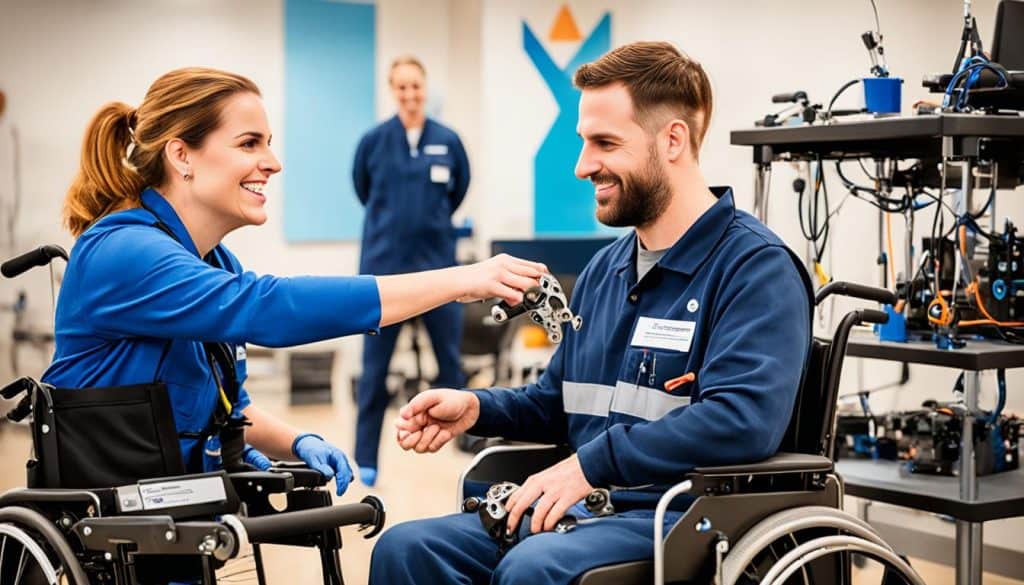
Individuals engaged in hazardous occupations often face additional risks that require specialized considerations within their disability policy provision. The very nature of their jobs can significantly increase the likelihood of an injury or disability, necessitating a dynamic approach to coverage and insurance policies that protects both the insurer and the insured. This section focuses on how disability insurance addresses these unique occupational risks and ensures fair treatment for those in more dangerous lines of work.
- Coverage Adjustments: When a policyholder shifts to a job considered to be a hazardous occupation, the disability policy provision may entail a review and reallocation of coverage limits.
- Insurance Premium Recalculations: In light of the new job-related risks, insurance premiums may increase to correspond with the higher level of risk presented by the hazardous occupation.
- Protection & Risk Management: The inclusion of such provisions underlines insurance companies’ commitment to risk management while ensuring that coverage remains adequate and equitable.
Such policy provisions demonstrate the adaptability of insurance plans, resonating with the core principle of coverage customization based on individual risk profiles. Now, let’s review some of the specific scenarios in which these provisions play a critical role:
| Occupation Type | Risk Level | Impact on Premium | Impact on Coverage |
|---|---|---|---|
| Construction Worker | High | Increase | Possible Benefit Reduction or Riders Required |
| Professional Diver | Very High | Significant Increase | Specialized Coverage Adjustments |
| Electrician | Moderate to High | Moderate Increase | Policy Review for Occupational Hazards |
| Office Administrator | Low | Potential Decrease | Standard Coverage |
To effectively navigate the intricate landscape of disability insurance, it is incumbent upon insurers and those employed in hazardous occupations to maintain transparent communication regarding occupational hazards. Clear understanding and proactive management of the disability policy provision are central to ensuring that coverage reflects the true nature of the risks involved.

Ultimately, the principal goal of adapting disability insurance for hazardous occupations is to ensure that workers have the necessary financial support in the event of a work-related disability, while insurance companies manage their risk exposure effectively. For anyone entering a hazardous field, an in-depth review and possible update of their disability insurance coverage is an essential step in safeguarding their well-being and financial stability.
Legal Framework: Protections and Obligations Under Disability Insurance Law
Within the United States, disability insurance law acts as a cornerstone, ensuring that the rights of insured individuals are safeguarded while also outlining the responsibilities insurance providers must adhere to. These state-level regulations are instrumental in guaranteeing a balanced and equitable approach to disability insurance coverage. Notably, these laws frequently mandate the inclusion of a change of occupation provision, which permits modifications to policy terms in response to employment shifts that affect the risk profile of the insured.
The protections enshrined in these laws are designed to preserve the financial stability and wellbeing of individuals should they become disabled, especially when such circumstances arise from a change to a more hazardous vocation. Consequently, the obligations laid upon insurance companies are stringent, requiring them to adjust benefits and premium rates accurately according to the insured’s new level of occupational risk. These legal requirements provide a structured process for policyholders, guiding them on how to officially inform their insurers about a change in occupation and the subsequent steps to ensure their coverage reflects their current employment situation adequately.
For individuals holding or considering disability insurance, comprehension of the coverage intricacies and legal statutes is crucial. Awareness of the existing legal framework enables policyholders to advocate effectively for their rights and to understand the scope of their insurance company’s duties toward them. This knowledge empowers individuals to take proactive measures, ensuring their disability coverage remains congruent with their life’s trajectory and occupational choices. In essence, the legal apparatus surrounding disability insurance is designed to serve as both a shield and a guide for those it intends to protect.
FAQ
What is the purpose of the change of occupation provision in disability insurance?
The change of occupation provision in disability insurance allows for adjustments to both premiums and benefits when an insured changes to a more or less hazardous occupation.
How are premiums and benefits adjusted when an insured changes to a more hazardous occupation?
When an insured changes to a more hazardous occupation, the insurance company will adjust the premiums based on the increased risk associated with the new occupation. The benefits provided by the policy will also be adjusted accordingly, taking into account the premium paid and the coverage limits for the more hazardous occupation.
What are the notification requirements and policy adjustments when an insured changes to a different occupation?
In order for the change of occupation provision to take effect, the insured must notify the insurance company of the job change. This notification may require submitting a document or proof of the change of occupation. Once the insurer receives this notification, they will adjust the policy accordingly. The premium rate will be reduced for a less hazardous occupation, and the excess unearned premium will be returned to the insured. For a more hazardous occupation, the premiums and benefits will be adjusted based on the new risk level.
Can you provide a case study on the impact of changing to a more hazardous occupation on disability coverage?
Certainly. Let’s consider a case study involving John, who previously worked in an office but decided to pursue a career in construction. John notified his insurance company of the change of occupation and provided the necessary documentation. The insurance company adjusted his policy’s premiums and benefits to reflect the increased risk associated with construction work. If John were to experience a disability related to his new occupation, the insurance company would only cover him at the rate of the premium that was paid.
What is the purpose of the change of occupation provision in disability insurance law?
Disability insurance is regulated by state laws, which establish protections for insured individuals and outline the obligations of insurance companies. These laws ensure that individuals are treated fairly and that their rights are protected. The change of occupation provision is a requirement under disability insurance law to allow for adjustments in premiums and benefits when an insured changes to a more hazardous occupation.