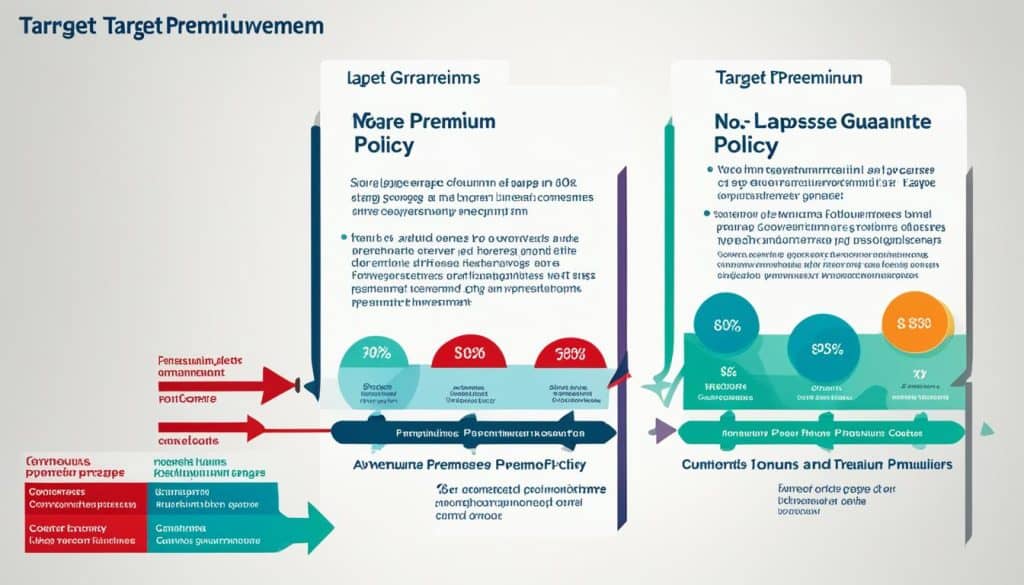
The target premium in a universal life insurance policy is essentially the amount recommended by the insurance company to keep the policy active throughout the insured’s lifetime, without the risk of policy lapse, assuming funds are managed according to predetermined assumptions. It’s a key component in universal life insurance that influences policy funding, performance, and longevity.
Key Takeaways
- Target premium is a guiding figure for policyholders to maintain their universal life insurance effectively.
- This premium affects both the funding strategy and the endurance of the policy.
- Understanding the implications of target premiums is vital for ensuring the policy serves its intended purpose over time.
- Comparing target premiums with no-lapse guarantee premiums helps policyholders choose the best funding options for their needs.
- Regular reviews and adjustments to the target premium can keep the universal life policy in line with changing financial goals and market conditions.
Defining Target Premium in Universal Life Policies
Understanding the fundamentals of target premium definition in the context of universal life policies is essential for policyholders to ensure they can manage their investment and secure their financial future. The planned premium stands pivotal in shaping the policy’s funding strategy, while simultaneously influencing policy performance and policy longevity. This section aims to demystify the concepts surrounding target premium and draw a clear comparison with no-lapse guarantee premiums.
Planned (Target) Premium: The Basis of Your Policy’s Funding
The planned or target premium in universal life policies refers to the amount that policyholders pay with the objective of keeping the policy in force until a certain maturity date, typically specified in the policy terms. This premium, carefully calculated based on various assumptions, forms the foundation of your policy funding. It keeps the policy active while also attributing to the buildup of cash value over time.
How Target Premium Affects Policy Performance and Longevity
When we discuss policy performance and policy longevity, we’re essentially looking at how well the policy meets the financial objectives of the insured over the long term. The decided target premium plays a vital role here; it’s not just about maintaining the policy but ensuring it performs efficiently. A well-calculated target premium ensures the policy does not lapse, and potentially accrues enough cash value to address the policyholder’s financial goals.
Comparing Target Premiums with No-Lapse Guarantee Premiums
In contrast to the flexible premiums of target-based policies, no-lapse guarantee premiums are designed to keep the policy in force for the guaranteed period, regardless of the policy’s cash value performance. The difference between the two premium types is significant, providing distinct choices for policyholders based on their financial planning and risk tolerance.
| Feature | Target Premium | No-Lapse Guarantee Premium |
|---|---|---|
| Flexibility | Higher | Lower |
| Cash Value Potential | Depends on performance | Generally not affected |
| Risk Tolerance | Suitable for those willing to manage and adjust | Preferred by those seeking stability |
| Premium Adjustments | Possible | Typically fixed |
| Policy Objective | Long-term growth and flexibility | Guaranteed protection |
Through this exploration of target premiums and no-lapse guarantee premiums, it becomes apparent that the chosen premium structure can dramatically affect the long-term viability and success of a universal life insurance policy. By comprehensively understanding these concepts, policyholders are better equipped to select the premium strategy that aligns with their unique financial goals and requirements.
Factors Influencing Target Premium Calculations
When it comes to universal life insurance, understanding the intricacies of target premium calculations is essential for policyholders. This section delves into the various components that play a pivotal role in determining the premiums of universal life insurance policies.
Key Variables Affecting Your Universal Life Insurance Premiums
Several factors contribute to the determination of universal life insurance premiums. Notably, assumed interest rates are significant as they influence the growth potential of the policy’s cash value. Additionally, the age impact and health impact of the policyholder at the time of application are critical in the calculation, impacting the risk assessment and consequently, the premium pricing.
The Role of Assumed Interest Rates and Cash Value in Premium Setting
The assumed interest rate is a projection used by insurers to estimate the future growth of a policy’s cash value component. This rate can affect target premium calculations, influencing the amount needed to ensure the policy remains active and benefits accrue as expected. The policy’s cash value is also integral to premium calculations because it can offset part of the cost of insurance as the policy matures, depending on actual performance against the assumed rates.
The Impact of Age and Health on Universal Life Policy Premiums
The health impact on premium calculations cannot be overstated. Insurers typically require a medical exam to assess risk and establish premiums based on current health status. Moreover, the age impact is equally significant, with older applicants generally facing higher premiums due to the increased risk of mortality. Understanding these age and health implications is vital for policyholders considering universal life insurance.

Premium Payment Strategies for Universal Life Insurance
Effectively navigating premium payment strategies is integral to maintaining a robust universal life insurance policy. Policyholders can optimize their premium payments by aligning them with their financial capabilities and life stage needs. A common approach is to pay more than the minimum premium in the early years of the policy when personal finances allow. This can potentially build up a cash value cushion, which may help in years when a lower premium payment may be needed. It’s pivotal to note, however, that overfunding can lead to the policy being classified as a Modified Endowment Contract (MEC), which can carry tax implications.
Another strategic premium payment practice is to monitor the policy’s performance regularly. Since universal life insurance offers flexibility, premiums can be adjusted as the cost of insurance (COI) changes or as the cash value’s interest crediting rates shift due to market conditions. Policyholders need to stay vigilant to avoid the risk of policy lapse, which can occur if the cash value depletes fully. Periodic reviews with your financial advisor can help in making informed decisions about premium adjustments.
Finally, longevity of the universal life policy is a factor that can be influenced by strategic premium payment. Some policyholders might opt for a level premium strategy to provide predictability and stability. This approach often aligns with a long-term outlook, setting a consistent premium that safeguards against lapsing while allowing the policy to accumulate cash value steadily over time. Each of these strategies demands a tailored approach, adapting to the policyholder’s changing circumstances, ensuring their universal life insurance remains a reliable pillar in their financial planning.
FAQ
What is target premium in a universal life policy?
Target premium refers to the planned premium amount that forms the basis of funding for a universal life insurance policy.
How does target premium affect policy performance and longevity?
Target premium plays a crucial role in determining the performance and longevity of a universal life insurance policy. It affects the cash value accumulation, death benefit, and policy costs over time.
How does target premium compare to no-lapse guarantee premiums?
Target premiums and no-lapse guarantee premiums are two different premium options in universal life insurance. While target premiums provide flexibility and potential growth, no-lapse guarantee premiums ensure the policy remains in force even if the cash value is insufficient to cover the expenses.
What factors influence target premium calculations in universal life insurance?
Several factors impact target premium calculations, including age, health, assumed interest rates, and cash value. These variables play a significant role in determining the appropriate premium amount for your specific circumstances.
What are the key variables that affect universal life insurance premiums?
Universal life insurance premiums are influenced by factors such as age, health, policy type, coverage amount, and the duration of coverage. These variables help determine the cost of the policy.
How do assumed interest rates and cash value impact premium setting?
Assumed interest rates and cash value affect premium setting by influencing the growth potential and policy costs. Higher assumed interest rates and cash value can result in lower premiums, while lower interest rates and cash value may require higher premiums.
How does age and health impact universal life policy premiums?
Age and health are critical factors that determine the risk profile of the policyholder. Younger and healthier individuals generally receive lower premiums compared to older individuals or those with underlying health conditions.
What are some premium payment strategies for managing universal life insurance policies?
There are various premium payment strategies for universal life insurance, such as paying premiums regularly, making lump sum payments, using policy dividends to offset premiums, and adjusting the premium payment frequency to align with your financial goals.
 benefits of maintaining a record clear of speeding violations extend beyond the immediate avoidance of fines and penalties. These benefits often translate into financial savings and a more favorable policy standing with insurance providers. Consider the following table that outlines the impact of a clean driving record.